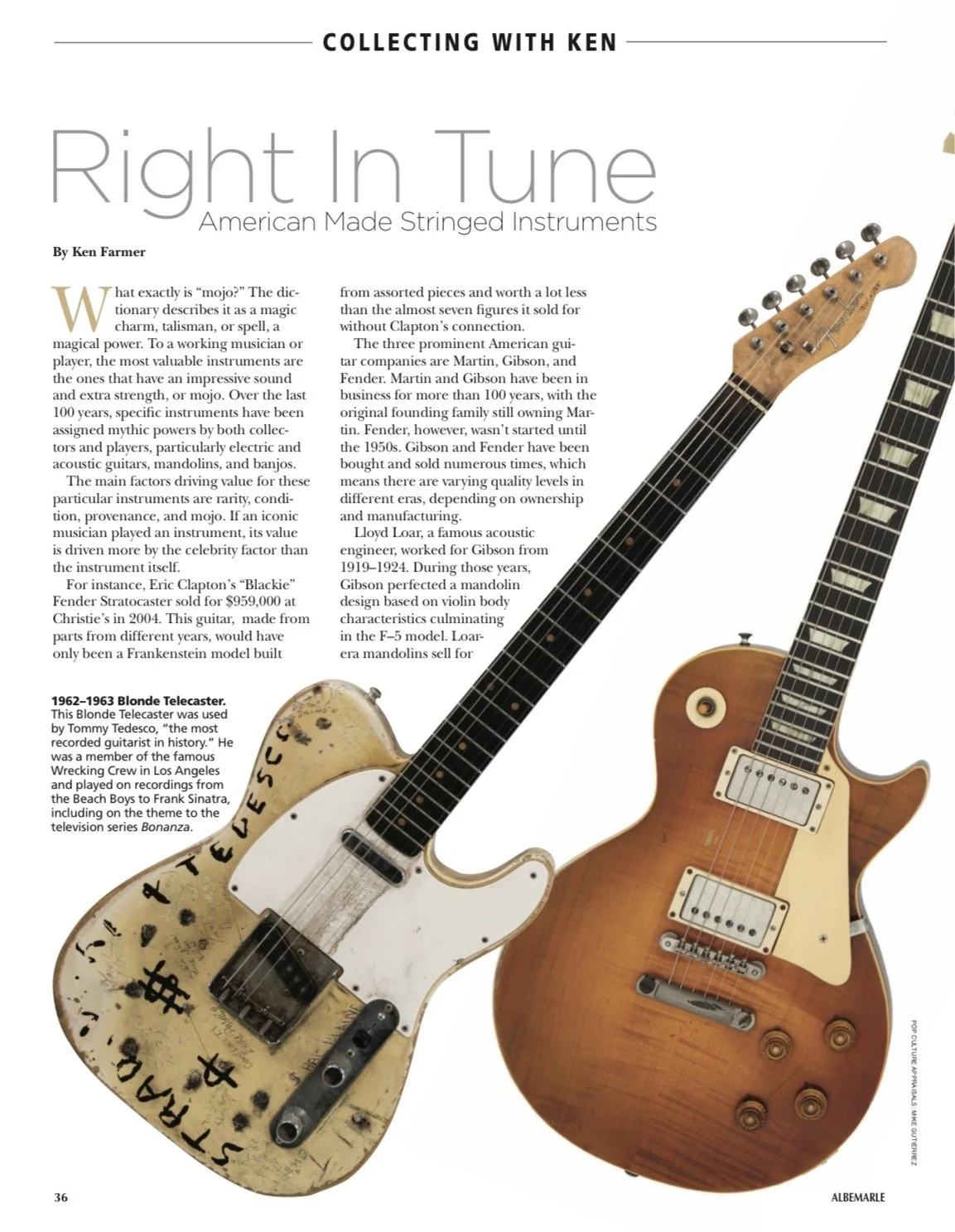
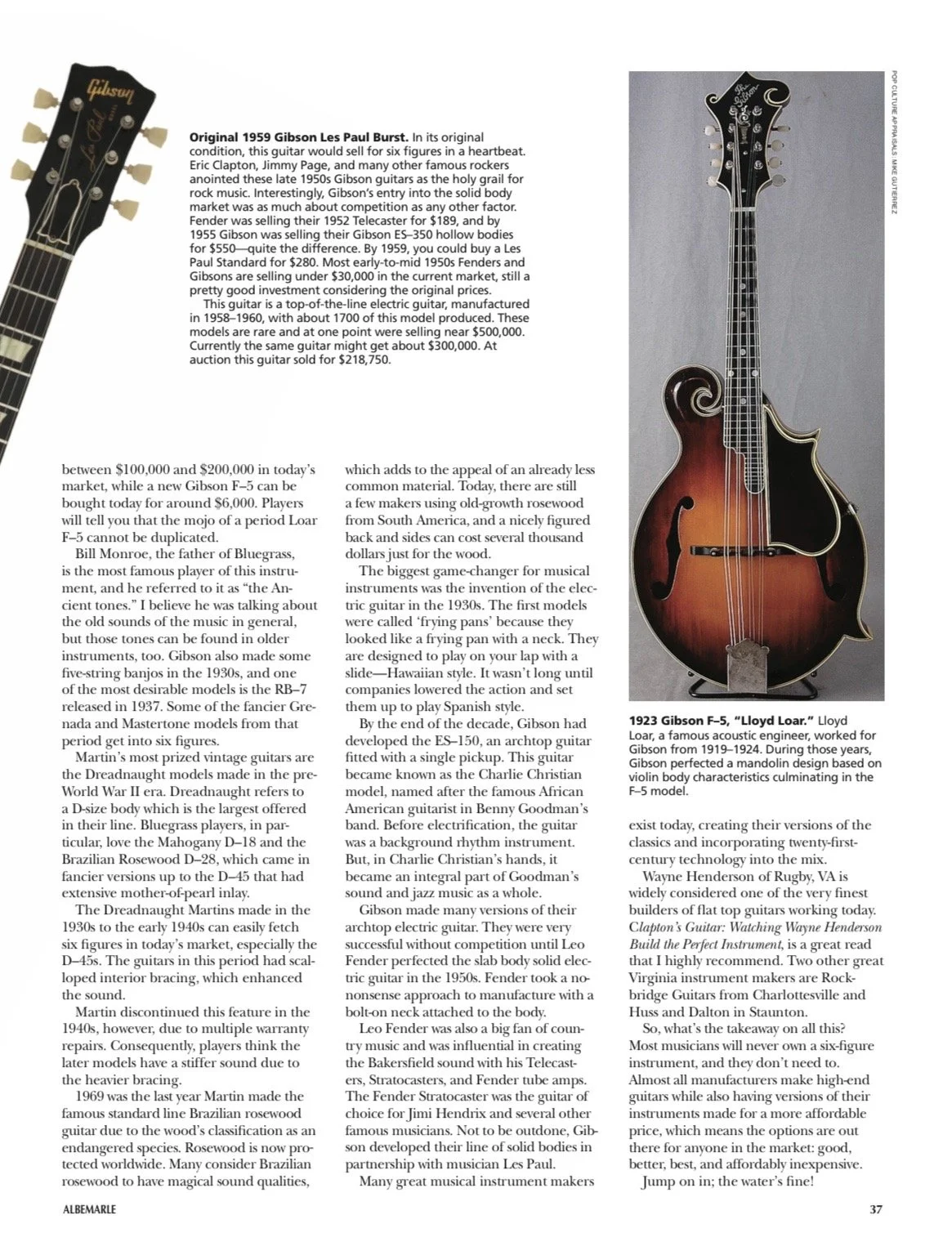
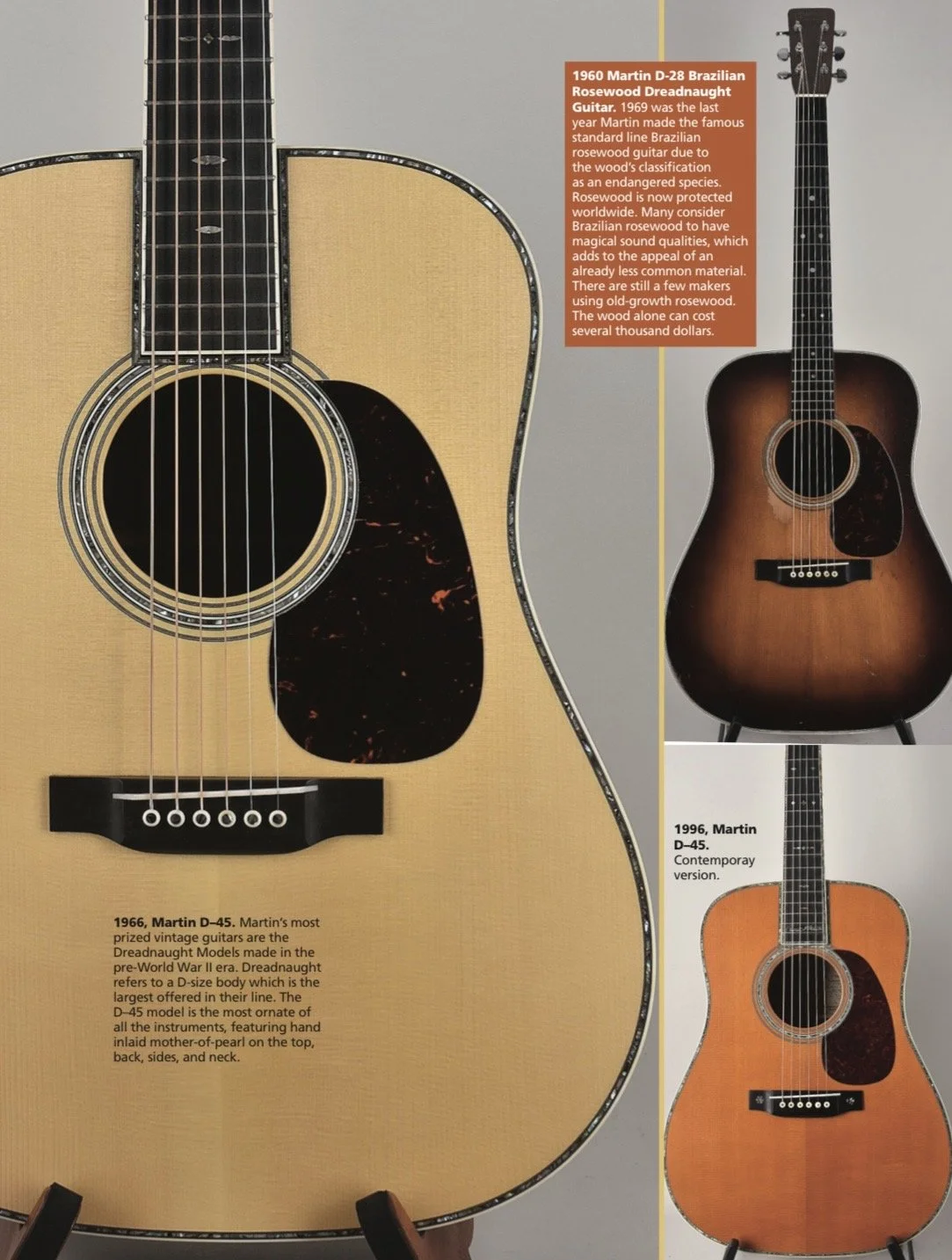
What exactly is “mojo?” The dictionary describes it as a magic charm, talisman, or spell, a magical power. To a working musician or player, the most valuable instruments are the ones that have an impressive sound and extra strength, or mojo. Over the last 100 years, specific instruments have been assigned mythic powers by both collectors and players, particularly electric and acoustic guitars, mandolins, and banjos. The main factors driving value for these particular instruments are rarity, condition, provenance, and mojo. If an iconic musician played an instrument, its value is driven more by the celebrity factor than the instrument itself. For instance, Eric Clapton’s “Blackie” Fender Stratocaster sold for $959,000 at Christie’s in 2004. This guitar, made from parts from different years, would have only been a Frankenstein model built from assorted pieces and worth a lot less than the almost seven figures it sold for without Clapton’s connection. The three prominent American guitar companies are Martin, Gibson, and Fender. Martin and Gibson have been in business for more than 100 years, with the original founding family still owning Martin. Fender, however, wasn’t started until the 1950s. Gibson and Fender have been bought and sold numerous times, which means there are varying quality levels in different eras, depending on ownership and manufacturing. Lloyd Loar, a famous acoustic engineer, worked for Gibson from 1919–1924. During those years, Gibson perfected a mandolin design based on violin body characteristics culminating in the F–5 model. Loarera mandolins sell for $100,000 and $200,000 in today’s market, while a new Gibson F–5 can be bought today for around $6,000. Players will tell you that the mojo of a period Loar F–5 cannot be duplicated. Read more…